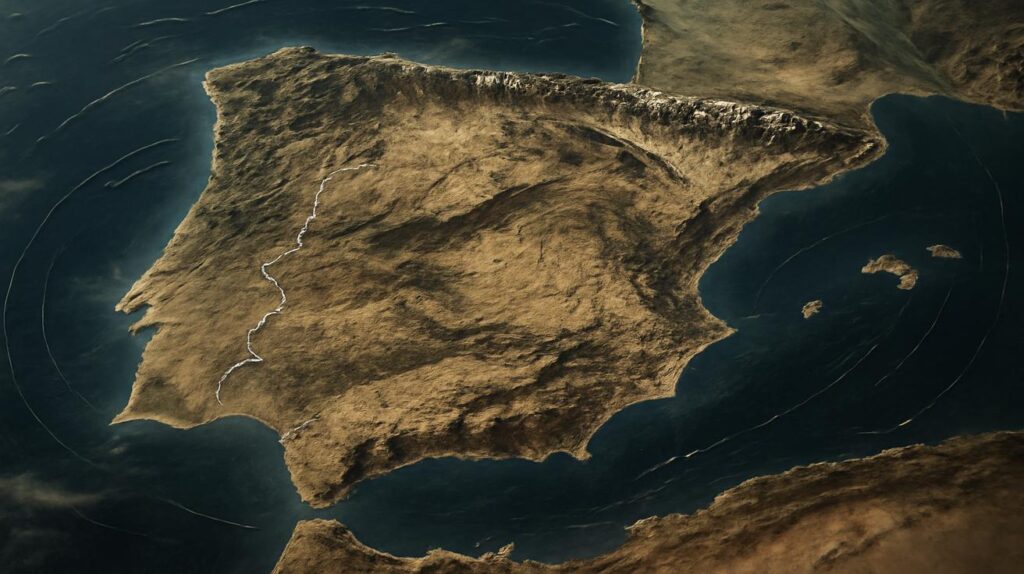

A fascinating geological discovery is sparking debate within the scientific community after researchers suggested that the Iberian Peninsula, home to Spain and Portugal, may be slowly rotating over time. While the movement is extremely subtle and unfolds across millions of years, the finding has triggered mixed reactions among geologists, ranging from scientific curiosity to cautious concern.
This unusual phenomenon, sometimes described as a slow continental “dance,” reflects the complex tectonic forces that constantly reshape Earth’s surface. Although the motion is too slow for humans to perceive directly, advanced satellite measurements and geological models are now revealing that parts of the region may be gradually shifting position.
For scientists studying plate tectonics, the discovery offers new insights into how continents move and interact over geological timescales.
Why Scientists Believe the Iberian Peninsula Is Rotating
Geologists have long known that Earth’s crust is divided into massive tectonic plates that move slowly over the planet’s mantle. These plates interact in complex ways, sometimes colliding, separating, or sliding past one another.
Recent geological studies suggest that the Iberian Peninsula sits in a particularly complex tectonic zone between the Eurasian Plate and the African Plate. Subtle pressure and movement between these plates may be causing the peninsula to slowly rotate over extremely long periods.
This motion is measured in millimeters per year, meaning it takes millions of years for noticeable changes to occur.
How Researchers Detect Such Slow Geological Movement
Scientists use highly precise instruments and satellite based monitoring systems to track tiny movements of Earth’s surface.
| Monitoring Method | Purpose |
|---|---|
| Satellite GPS networks | Measure millimeter level land movement |
| Seismic analysis | Study stress within tectonic boundaries |
| Geological mapping | Identify long term structural shifts |
| Plate motion modeling | Simulate continental movement over time |
| Ocean floor studies | Track tectonic interactions near coastlines |
These technologies allow geologists to observe movements that would otherwise be impossible to detect with the naked eye.
Why Some Scientists Are Concerned While Others Are Not
The discovery has sparked debate because interpretations of the data vary among experts. Some researchers believe the gradual rotation could influence long term seismic activity in the region.
Others argue that the movement is simply part of the natural tectonic processes that have shaped continents for hundreds of millions of years. From this perspective, the motion is slow and predictable rather than alarming.
Because tectonic processes unfold over immense timescales, most scientists emphasize that there is no immediate threat associated with the movement.
Key Geological Forces Behind the Movement
Several tectonic mechanisms may contribute to the slow shift of the Iberian Peninsula.
• Pressure from the northward movement of the African Plate
• Complex interactions along the Eurasian tectonic boundary
• Gradual stress accumulation in regional fault systems
• Long term geological adjustments within Earth’s crust
• Oceanic plate movements influencing continental margins
Together, these forces create subtle but measurable changes in the position of landmasses over time.
Why This Discovery Matters for Earth Science
Even though the movement is extremely slow, understanding these processes is important for improving geological models and earthquake forecasting research.
The Iberian Peninsula sits near tectonic boundaries that have historically produced earthquakes, including significant seismic events recorded in past centuries.
Studying how tectonic pressure builds and releases in this region helps scientists refine predictions about future geological activity.
Conclusion:
The suggestion that Spain and Portugal may be slowly rotating as part of a long term tectonic process highlights the dynamic nature of Earth’s surface. While the movement occurs at an almost imperceptible pace, it offers valuable insights into the powerful geological forces shaping continents.
For scientists, the discovery is less about alarm and more about expanding our understanding of how the planet evolves over millions of years. The slow continental motion serves as a reminder that Earth’s landscapes are constantly changing, even when those changes happen far beyond the scale of human lifetimes.
Disclaimer:
Geological interpretations and tectonic models continue to evolve as new data becomes available. The movements described occur over extremely long timescales and do not represent immediate geological hazards.