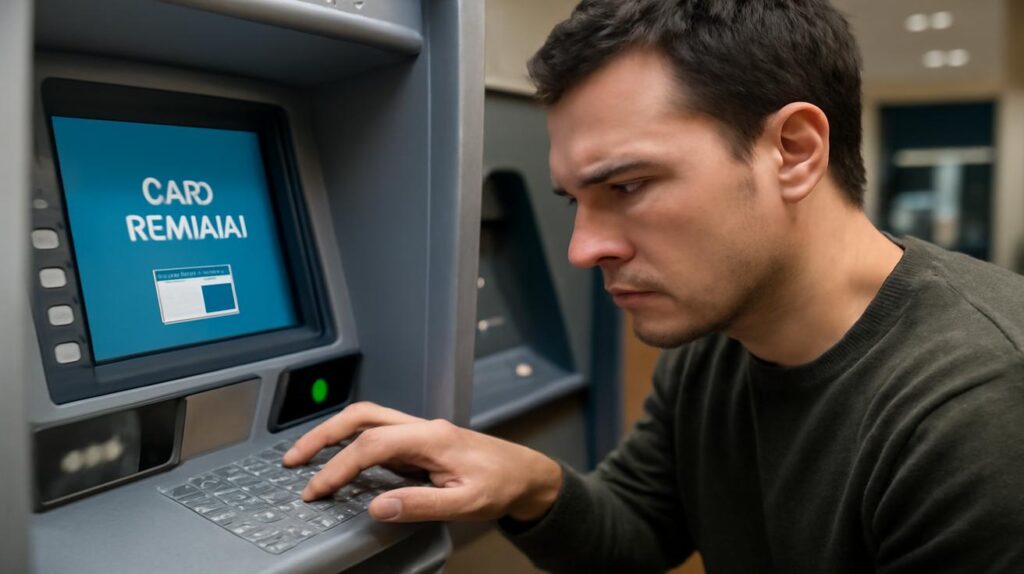

Few moments feel as stressful as when an ATM suddenly keeps your bank card. You insert the card, complete your transaction, and then the machine unexpectedly pulls the card back inside instead of returning it. For many people, the first reaction is panic, especially if the bank branch is closed or the machine is located in a busy public place.
However, banking experts say there is often a quick action you can try immediately after the card is retained. In some situations, pressing a specific button within seconds may cancel the transaction cycle and prompt the ATM to release the card again.
Understanding how ATM systems work can make a huge difference when this situation happens.
Why ATMs Sometimes Keep Bank Cards
Automated teller machines are programmed with security features designed to prevent fraud and protect customer accounts. When certain conditions occur, the machine may automatically retain the card.
Common reasons include entering the wrong PIN multiple times, leaving the card in the slot too long without completing a transaction, or a system communication error between the ATM and the bank network.
In some cases, banks intentionally capture cards that have been reported lost, stolen, or blocked for security reasons.
The Quick Action Many People Do Not Know
When an ATM keeps a card during a transaction, acting quickly can sometimes make a difference. Some banking technicians explain that pressing the cancel button immediately after the card is retained may interrupt the transaction cycle.
If the machine has not yet completed the card capture process, the system may return the card through the slot.
This quick reaction works only in certain situations and must be attempted immediately before the machine fully locks the card inside its internal security compartment.
What to Do Immediately if an ATM Keeps Your Card
• Press the cancel button on the keypad right away
• Wait a few seconds to see if the machine releases the card
• Check the screen for instructions or error messages
• If the card does not return, contact the bank immediately
• If the ATM is attached to a bank branch, notify staff as soon as possible
Taking these steps quickly can help minimize risk and ensure your account remains protected.
What Happens to Cards Captured by ATMs
| Situation | What Usually Happens |
|---|---|
| Wrong PIN entered multiple times | ATM captures the card for security |
| Card left too long in the slot | Machine retracts it automatically |
| Card reported lost or blocked | ATM permanently retains the card |
| Technical system error | Card may be stored inside the ATM |
| Bank security alert | Card held until verified by bank |
In most cases, captured cards are stored safely inside the machine until bank technicians retrieve them during scheduled maintenance.
Why Banks Use This Security Measure
ATM card capture systems are designed to prevent unauthorized access to bank accounts. If someone attempts to use a stolen card or repeatedly enters the wrong PIN, the machine retains the card to stop further attempts.
This security feature helps reduce fraud and protects account holders from potential financial loss.
While it may be inconvenient for the cardholder, the system is meant to safeguard sensitive financial information.
Conclusion:
Having an ATM keep your bank card can be unsettling, but knowing how to react quickly can make the situation easier to manage. Pressing the cancel button immediately after the card is retained may occasionally trigger the machine to release it.
If the card is not returned, contacting the bank promptly ensures that your account remains secure and that the card can be recovered or replaced if necessary.
Understanding these simple steps can help you stay calm and respond effectively if an ATM unexpectedly keeps your card.
Disclaimer:
ATM behavior may vary depending on the bank, machine model, and security protocols. If your card is retained by an ATM, always contact your bank directly for official guidance and assistance.